
Table of Contents
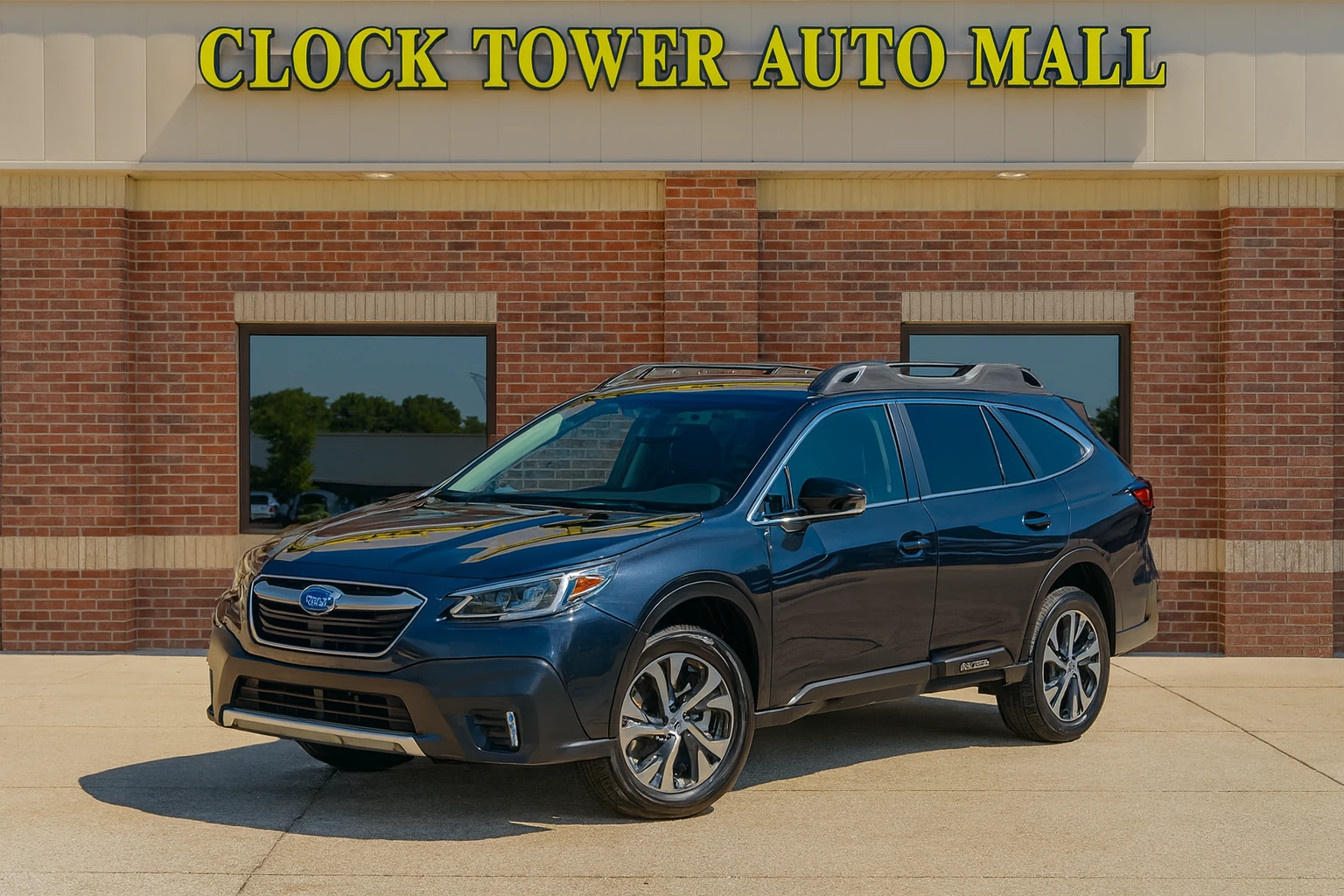
The 2021 Subaru Outback and 2021 Honda CR-V are two of the most popular choices in the crossover segment, but they cater to slightly different buyers. The Outback leans rugged, with standard all-wheel drive and generous ground clearance that make it ideal for outdoor enthusiasts or drivers in snow-heavy climates. Meanwhile, the CR-V delivers exceptional fuel efficiency, a comfortable ride, and class-leading practicality, making it a top pick for families and commuters. Both models offer strong safety features and excellent resale value, but your priorities adventure capability vs everyday comfort and efficiency will ultimately determine the better fit.
Here’s a detailed comparison of the 2021 Subaru Outback vs. the 2021 Honda CR-V, looking at their strengths, trade-offs, and which might be the better fit depending on what you value.
1. Overview & Positioning
- Subaru Outback (2021): A rugged, wagon-crossover hybrid. It emphasizes off-road capability, ground clearance, and utility, while still being practical for daily driving.
- Honda CR-V (2021): A more traditional compact SUV, focused on comfort, efficiency, and mainstream everyday usability. It’s very competitive in the crossover market.
2. Powertrain & Performance
Subaru Outback
- Comes standard with all-wheel drive (AWD), which is a big plus in poor weather or light off-road.
- Engine options typically include a 2.5-liter four-cylinder (around ~182 hp) and a more powerful 2.4-liter turbo (higher torque for towing).
- The ride is tuned to handle rougher terrain reasonably well, though it’s not a hardcore off-roader.
Honda CR-V
- Generally front-wheel drive in base trims, with all-wheel drive available.
- Uses a 1.5-liter turbocharged four-cylinder (in many markets), giving a good balance of power and fuel efficiency.
- The CR-V is well suited to daily driving and highway cruising, with good responsiveness and a smooth ride, but less ground clearance than the Outback.
Take-away: If you need AWD standard and sometimes want to go off the beaten path, the Outback has an edge. If you prioritize fuel efficiency and urban/highway driving, the CR-V is compelling.
3. Fuel Efficiency
- Outback: Because of its AWD and possibly larger engines, fuel economy will generally be a little lower than a comparable FWD-only crossover.
- CR-V: The turbocharged engine, combined with the option for FWD, helps it achieve very good fuel efficiency for its class.
4. Cargo, Space & Practicality
Subaru Outback
- Very capable cargo space for a “wagon”-style crossover, with a wide and flat load floor.
- Roof rails are often standard or available, making it very practical for outdoor gear, bikes, kayaks, etc.
- Rear passenger space is generous, though legroom may be similar to CR-V depending on trim.
Honda CR-V
- Offers a cavernous cargo area for a compact SUV, especially when rear seats are folded.
- The liftgate is user-friendly, and there’s good flexibility for passenger vs. cargo configurations.
- Rear seats are often very comfortable, and headroom is good.
Take-away: Both are practical, but if you’re thinking about outdoor gear and want a lower, more wagon-like cargo floor, the Outback is attractive. For more traditional SUV space and flexibility, CR-V is very strong.
5. Handling & Ride Comfort
- Outback: Higher ground clearance means a bit more body roll than sedans, but the suspension is tuned to absorb bumps and rough roads. It’s more “planted” when driving on gravel or uneven surfaces.
- CR-V: More composed on paved roads, with tight steering and a smooth ride in typical city or highway driving. Not designed for serious off-road exploration, but well balanced for its class.
6. Safety & Driver Assistance
Both Subaru and Honda are known for strong safety offerings. In 2021:
- Subaru Outback: Likely includes Subaru’s EyeSight system (adaptive cruise control, lane-keep assist, pre-collision braking), plus good crash-test ratings.
- Honda CR-V: Usually comes with Honda Sensing suite (adaptive cruise, collision mitigation braking, lane-keeping, road-departure mitigation).
Because of their reputations, both are very competitive on safety; the choice here depends less on which is “safer” and more on which driving-assist feel you prefer.
7. Reliability & Ownership Costs
- Reliability: Both models have generally good reputations. Subaru’s AWD system adds mechanical complexity, but the brand has matured. Honda is known for long-term durability.
- Maintenance Costs: AWD systems (in Outback) may mean slightly higher maintenance in some cases (tires, drivetrain), but fuel cost differences and insurance depend on local factors.
- Resale Value: Both hold value well; outdoorsy wagons (like the Outback) can be very desirable in some markets, while compact SUVs (like the CR-V) are evergreen.
8. Pricing & Trim Options
- The Outback’s off-road capability and standard AWD often make it slightly more expensive than a base CR-V, but pricing depends heavily on trim, region, and features.
- The CR-V offers a variety of trims, including more affordable ones and high-end ones with more tech.
- Optional packages (off-road, premium, safety) can shift value significantly.
9. Pros & Cons Summary
2021 Subaru Outback – Pros
- Standard AWD
- Excellent ground clearance
- Very practical for outdoor gear
- Rugged feel, but still refined enough for daily driving
2021 Subaru Outback – Cons
- Lower fuel efficiency compared to FWD crossovers
- Higher maintenance cost potential (AWD)
- Possibly more expensive base price
2021 Honda CR-V – Pros
- Great fuel efficiency (especially in FWD or with its turbo engine)
- Smooth, comfortable ride on paved roads
- Very flexible cargo and passenger space
- Strong value among compact SUVs
2021 Honda CR-V – Cons
- AWD is optional (not standard)
- Less ground clearance and off-road capability
- May feel less “rugged” than the Outback for outdoor-focused buyers
10. Which Should You Choose?
Here are some scenarios to help decide:
- Go with the Outback if: You live in an area with rough roads, snow, or you frequently go camping, hiking, or need to haul gear. The AWD, roof rails, and wagon-style cargo make it ideal for adventure.
- Choose the CR-V if: Your driving is mostly on paved roads, you want better fuel economy, and you need a reliable and spacious compact SUV for family, commuting, or urban/suburban life.
- Consider long-term costs: Think about fuel, insurance, and maintenance. If AWD isn’t necessary, CR-V might save you more over time.
- Resale and ownership goals: If you want something that holds well and is very practical, both are good, but the Outback may appeal more to niche/outdoor buyers.
11. Final Thoughts
The 2021 Subaru Outback and 2021 Honda CR-V each play to different strengths. The Outback is a rugged, capable wagon crossover that’s well-suited for outdoor lifestyles, while the CR-V is a practical and efficient compact SUV that excels in daily driving and family duty. Your best pick depends on where you drive, what you carry, and how much off-pavement work you expect to do.
Frequently Asked Questions
It depends on your lifestyle. The Outback is better for off-road and all-weather driving, while the CR-V excels in fuel economy, comfort, and practicality.
Yes. AWD is standard on every 2021 Outback trim.
No, AWD is optional. Many CR-V models come with FWD unless upgraded.
The Honda CR-V typically has significantly better fuel economy thanks to its efficient turbocharged engine and available FWD setup.
The Subaru Outback its AWD system and high ground clearance make it much more capable in challenging conditions.
Both offer excellent cargo room, but the CR-V has a slight edge in total cargo capacity. The Outback, however, has a wide, long, and low cargo floor that’s great for hauling long items.
- Outback: 2.5L boxer engine (standard) or a stronger 2.4L turbo.
- CR-V: 1.5L turbo engine with good torque and fuel efficiency.
The Outback turbo is more powerful; the CR-V engine is more efficient.
The Outback, especially with the turbo engine, can tow more — up to 3,500 lbs depending on trim.
The CR-V is typically rated around 1,500 lbs.
Both have strong reliability reputations. Honda has a slight edge historically, but Subaru’s reliability has been consistent, especially with modern models.
Yes. Both offer advanced driver-assistance suites:
- Outback: Subaru EyeSight
- CR-V: Honda Sensing
Both score highly in crash tests.
Both hold value well, but the Outback tends to be especially strong in markets with winter weather or outdoor-focused buyers.
Both are comfortable, but the Outback usually has a smoother ride on rough surfaces, while the CR-V is very refined on highways and city roads.
Most commuters prefer the CR-V for its fuel efficiency and refined road manners.
The Outback has better ground clearance, standard AWD, and adventure-ready roof rails.
Yes, but AWD systems (standard on Outback) can raise tire and drivetrain maintenance slightly. CR-V often wins on long-term cost of ownership.

Comments
Log in to add a comment.